Your Pet is Always Communicating―Are you Paying Attention?
Have you ever looked into your pet’s eyes and felt like they were on the verge of speaking, only to have the moment pass in a flurry of barks or a sudden feline retreat?
Here is a truth that most pet owners overlook:
Your pet is already speaking to you. They are communicating in a sophisticated, ancient language of postures, micro-expressions, and scent. They aren’t using words because, in the animal kingdom, words are inefficient. Instead, they rely on a complex “full-body” vocabulary to express everything from soul-deep contentment to silent, throbbing pain.
The problem? Most humans are “species-blind.” We project our own emotions onto our pets. We see a “smile” where there is actually respiratory distress; we see “guilt” where there is actually profound fear.
When we misinterpret these signals, we don’t just miss a “conversation”—we potentially ignore early signs of illness or safety warnings that lead to bites and scratches.
In this definitive guide, we will decode the secret body language of dogs, cats, and exotic pets, helping you transition from a confused owner to a fluent, “smart” pet parent.
Part 1: Why Mastering “Pet-Speak” is a Game Changer
Before we dive into the specific “words” of the tail and ears, we must understand the stakes. Understanding animal behaviour isn’t just a party trick; it is a fundamental pillar of responsible pet ownership.
- Safety First
Most “unprovoked” dog bites or cat scratches are anything but unprovoked. Animals almost always give a series of “escalation signals” before they resort to physical defence. By recognising a “stiffened spine” or a “half-moon eye,” you can intervene before a child or another pet gets hurt. - Mental Health and Trust
Imagine living with someone who constantly hugged you when you were feeling a migraine coming on. You would eventually become resentful or anxious. When you learn to respect your pet’s “request for space,” you build a foundation of trust that makes training and bonding ten times easier. - Early Medical Detection
Changes in body language are often the first symptoms of internal issues. A cat that suddenly stops jumping onto high counters isn’t “getting lazy”; they are likely dealing with undiagnosed arthritis. A dog that starts “fly-snapping” at invisible objects may be experiencing focal seizures.
Part 2: The Dog Decoder — Beyond the Bark
Dogs are often described as “open books,” but their grammar is more nuanced than we realise. To truly understand a dog, you must look at the entire animal, from the tip of the nose to the base of the tail.
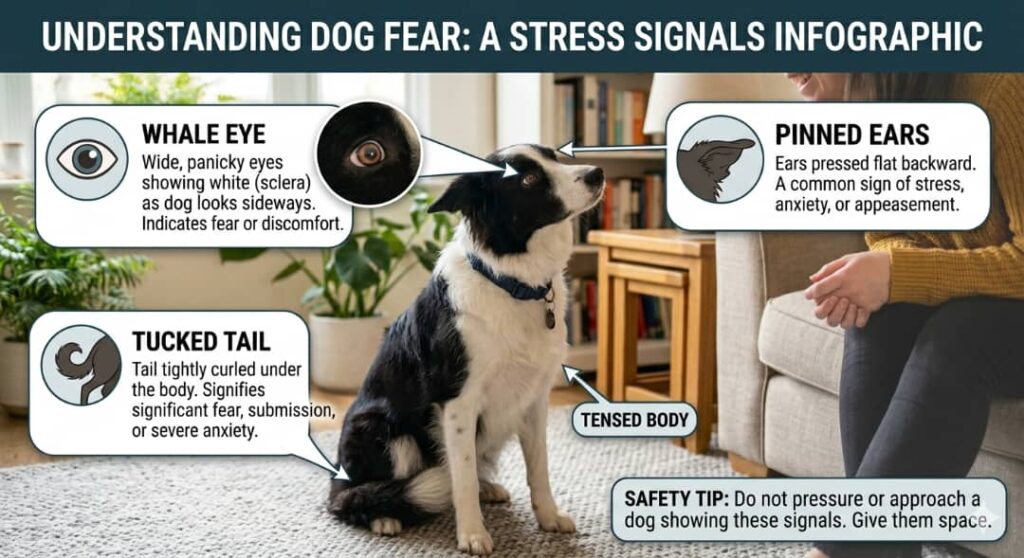
🐾 The Tail: The Great Misunderstander
The biggest myth in pet care is that a wagging tail equals a happy dog. In reality, a wag simply indicates emotional arousal. The direction and height are what define the emotion.
- The “Helicopter” Wag: A circular, loose wag that involves the whole hips. This is the “Universal Green Light”—it means the dog is truly relaxed and happy to see you.
- The Low, Slow Wag: Often seen during introductions. This indicates a dog that is “testing the waters.” They are uncertain and assessing if you are a threat.
- The High, Stiff “Flag”: If the tail is arched high and vibrating quickly, this is a “Red Light.” The dog is highly overstimulated and may be seconds away from a reactive snap.
- The Left-Leaning Wag: Fascinatingly, research suggests dogs wag more to the right when they are happy and more to the left when they are fearful or anxious.
🐾 The “Calming Signals”: Your Dog’s Peace Treaty
Dogs are masters of conflict resolution. When they feel a situation is becoming too tense, they use “calming signals” to tell you (or another dog) to “cool it.”
- The Yawn: If your dog yawns at the vet or while you are scolding them, they aren’t bored. They are trying to lower their own cortisol levels and tell you they aren’t a threat.
- Lip Licking: A quick flick of the tongue when there is no food present is a sign of social pressure.
- The “Look Away”: If you try to take a “selfie” with your dog and they turn their head away, they are politely asking for space.
🐾 The Eyes: “Whale Eye” and Staring
- Soft Eyes: Squinty, relaxed lids indicate comfort.
- Whale Eye: This is when you can see the whites (sclera) of the dog’s eyes. This is a major stress signal. It usually happens when a dog is guarding a toy or feeling cornered. Stop what you are doing immediately.
Part 3: The Cat Code―The Art of the Whisper
If dogs are the extroverts of the animal world, cats are the masters of the subtle subtext. Because cats are both predators and prey, they are highly selective about who they show their true feelings to.
🐾 The Slow Blink: The Feline “I Love You”
In the wild, closing one’s eyes is the ultimate vulnerability. When a cat looks at you and slowly closes and opens their eyes, they are saying, “I trust you enough to close my eyes in your presence.” The Smart Move: Blink back slowly. It’s the most effective way to lower a cat’s cortisol.
🐾 The Tail: The Mood Pendulum
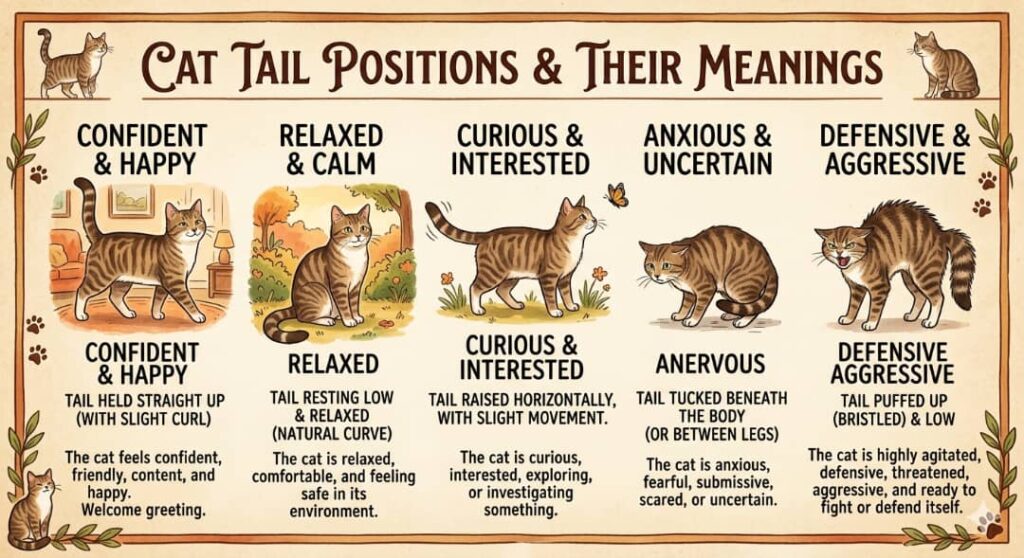
Unlike dogs, a lashing cat tail is almost never a good sign.
- The Question Mark: A vertical tail with a little curl at the top means “I’m friendly and open to interaction.”
- The Twitching Tip: If just the end of the tail is flicking, the cat is becoming overstimulated. This often happens during petting sessions; if you don’t stop, a “love nip” is likely coming.
- The Bottle Brush: A puffed-up tail means the cat is terrified and trying to look larger to a potential predator.
🐾 The Purr: The Myth of the Happy Cat
Most people think purring always means “I’m happy.” However, veterinarians have discovered that cats purr at a frequency that promotes bone and tissue healing. Context is King: If your cat is purring while hiding under the bed or after a fall, they may be in pain or significant distress.
Part 4: Exotic Pets―The Forgotten Languages
At Ajovia, we believe smart pet care extends to every creature under your roof.
🐦 Birds: The Fluff and The Click
- Pinning Eyes: When a bird’s pupils rapidly dilate and contract, they are excited or agitated.
- Beak Clicking: This can be a sign of contentment or a warning to stay back, depending on the species.
- Fluffed Feathers: While it can mean they are cold, if a bird stays fluffed for long periods, it is a classic sign of avian illness.
🐰 Rabbits: The Thump and The Binky
- The Thump: Rabbits hit the ground with their hind legs to warn the “warren” (you) of danger.
- The Binky: A sudden twist, jump, and kick in the air. This is the “Apex” of rabbit happiness.
Part 5: The “Species-Blind” Mistake — Projection vs. Reality
One of the biggest hurdles to understanding your pet is Anthropomorphism—the act of giving human traits to animals.
The “Guilty” Dog Myth:
You come home to a shredded pillow. Your dog’s head is down, their ears are back, and they are slinking away. You think, “He knows what he did!” Science tells us otherwise. The dog is reacting to your body language. They see your furrowed brow and hear your loud voice; they are offering “appeasement behaviours” to stop the conflict. They aren’t feeling “guilt” about the pillow; they are feeling “fear” about your current reaction.
The “Grumpy” Cat Myth:
We often label cats as “jerks” for knocking things off tables or swatting. In reality, these are often signs of under-stimulation. A cat swatting at your ankles as you walk by isn’t being mean; they are displaying a frustrated hunting instinct because they haven’t had enough interactive play.
Part 6: How Ajovia Bridges the Communication Gap
Decoding your pet shouldn’t feel like a full-time job. This is where Ajovia’s smart platform steps in. We move beyond simple observation and into data-driven insights.
- Behaviour Pattern Recognition
By logging your pet’s “Daily Mood” in the Ajovia app, our system can identify trends. Does your dog show “Whale Eye” every Tuesday? Maybe that’s the day the loud garbage truck comes by. Ajovia helps you connect the dots between environment and behavior. - Trigger Identification
Is your cat’s “tail lashing” linked to a specific type of food or a certain time of day? Tracking these micro-behaviours allows you to present your vet with a clear, objective history rather than vague guesses. - Expert Guidance at Your Fingertips
When you aren’t sure if a behaviour is “normal,” Ajovia provides a curated library of resources. Instead of “Dr. Google,” you get science-backed behavioural advice tailored to your pet’s breed and age.

Conclusion: The Reward of Listening
When you start “listening” with your eyes, your relationship with your pet will undergo a radical transformation. You will stop “managing” a pet and start “partnering” with a companion.
You will catch the ear infection before the dog starts shaking its head.
You will notice the cat’s stress before they stop using the litter box. You will provide the safety and security your pet has been asking for all along.
Your pet is already talking. Are you ready to listen?
📩Take the Next Step in Smart Pet Parenting
Don’t let your pet’s signals go unheard. Join the community that prioritises communication over guesswork.
- Subscribe to the Ajovia Newsletter for weekly “Behaviour Deep Dives.”
- Download the Ajovia App to start tracking your pet’s behavioural health today.
- Share this guide with a friend who thinks their dog’s “yawn” just means they’re sleepy!
- Have a pet care question? Drop it in the comments, and we may cover it in a future post!